
Summary
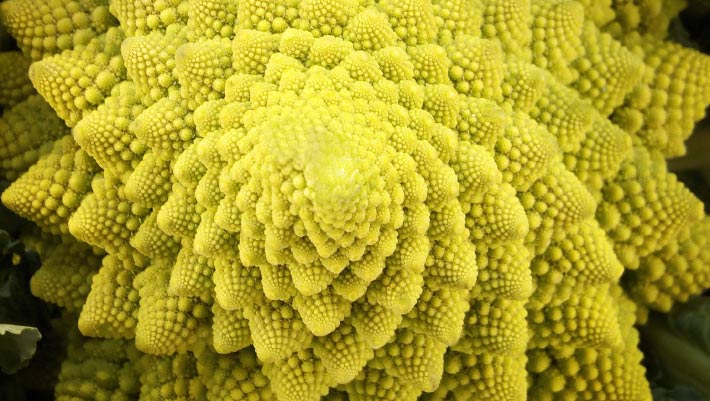
The research, which combined **mathematical modeling** and **plant biology**, found that the brief incursion of buds into a flowering state profoundly affects their functioning and allows them to grow without leaves and multiply almost infinitely. This study is a significant contribution to our understanding of **phyllotaxis**, the study of the geometric organization of leaves and stems in plants. The findings were published in the July 9, 2021 issue of the journal **Science**, and have implications for our understanding of **fractals** in nature, such as [[ice-crystals|Ice Crystals]] and [[tree-branches|Tree Branches]].
Key Takeaways
- The Romanesco cauliflower has a unique, fractal shape due to the rapid production of buds by its stems
- The study of Romanesco cauliflowers combined mathematical modeling and plant biology
- The discovery of the fractal shape of Romanesco cauliflowers could lead to significant breakthroughs in agriculture
- The study highlights the importance of interdisciplinary research and the need for scientists to work together to achieve significant breakthroughs
- The research has implications for our understanding of phyllotaxis and plant biology
Balanced Perspective
The study of Romanesco cauliflowers is a fascinating example of the complex relationship between **plant biology** and **mathematics**. While the discovery of the fractal shape of Romanesco cauliflowers is an important breakthrough, it is still unclear how this knowledge will be applied in practice. Further research is needed to fully understand the implications of this study, and to determine how it can be used to improve **agricultural practices**, such as [[crop-rotation|Crop Rotation]] and [[irrigation|Irrigation]]. The study also raises questions about the **evolutionary history** of Romanesco cauliflowers, and how they developed their unique shape over time.
Optimistic View
The discovery of the fractal shape of Romanesco cauliflowers is a significant breakthrough in our understanding of **plant development**. This research has the potential to revolutionize the field of **agriculture**, as it could lead to the development of new, more efficient ways of growing crops. According to **Dr. Farcot**, the study of **Romanesco cauliflowers** could also lead to a greater understanding of **fractals** in nature, and how they can be applied to other fields, such as [[architecture|Architecture]] and [[engineering|Engineering]]. The study also highlights the importance of **interdisciplinary research**, as it combined **mathematics**, **biology**, and **agriculture** to achieve its findings.
Critical View
The study of Romanesco cauliflowers, while fascinating, is a relatively niche area of research. While the discovery of the fractal shape of Romanesco cauliflowers is an interesting finding, it is unclear how this knowledge will be applied in practice. The study also highlights the limitations of **mathematical modeling** in understanding complex biological systems, and the need for further research to fully understand the implications of this study. Additionally, the study raises concerns about the **genetic modification** of crops, and the potential unintended consequences of altering the genetic code of plants, such as [[genetic-drift|Genetic Drift]] and [[gene-flow|Gene Flow]].
Source
Originally reported by Sci.News