Mathematical Analysis of Blood Glucose Insulin Model through Fractal
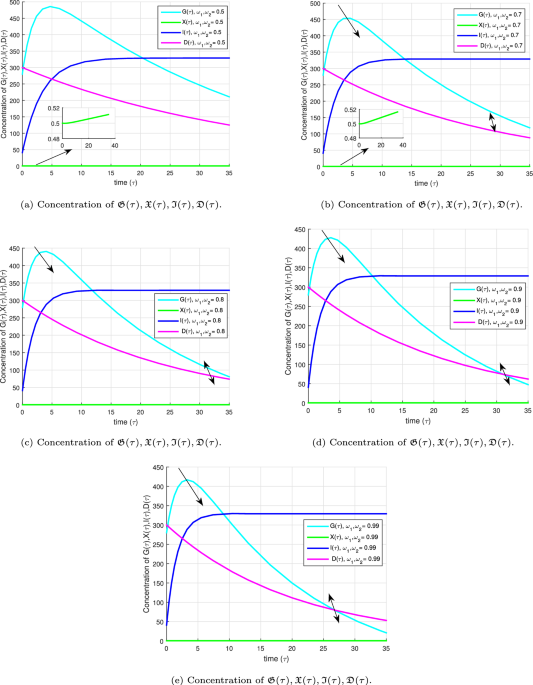
A recent study published in **Nature** on **June 3, 2025**, presents a mathematical analysis of a modified blood glucose insulin model using **fractal fractiona
Summary
A recent study published in **Nature** on **June 3, 2025**, presents a mathematical analysis of a modified blood glucose insulin model using **fractal fractional operators**. The research aims to provide a deeper understanding of the complex dynamics of **diabetes** and its associated complications. The study's findings have significant implications for the development of more effective **diabetes management** strategies. The use of **fractal fractional operators** allows for a more nuanced understanding of the non-linear relationships between **blood glucose levels** and **insulin**. This research has the potential to improve **diabetes treatment** outcomes and reduce the risk of **diabetes-related complications**. For more information on **diabetes**, visit the [[diabetes|Diabetes]] page. The study's methodology is also related to [[mathematical-modeling|Mathematical Modeling]] and [[systems-biology|Systems Biology]].
Key Takeaways
- The study presents a mathematical analysis of a modified blood glucose insulin model using fractal fractional operators
- The research provides a more nuanced understanding of the non-linear relationships between blood glucose levels and insulin
- The study's findings have significant implications for the development of more effective diabetes management strategies
- The use of fractal fractional operators is a innovative approach to understanding diabetes
- Further research is needed to fully understand the implications of the study's results
Balanced Perspective
The study presents a mathematical analysis of a modified blood glucose insulin model using **fractal fractional operators**. The research provides a more nuanced understanding of the non-linear relationships between **blood glucose levels** and **insulin**. However, the study's findings are not without limitations, and further research is needed to fully understand the implications of the results. The study's methodology is also related to [[mathematical-modeling|Mathematical Modeling]] and [[systems-biology|Systems Biology]]. For more information on **mathematical modeling**, visit the [[mathematical-modeling|Mathematical Modeling]] page. The study is also related to [[biostatistics|Biostatistics]] and [[epidemiology|Epidemiology]].
Optimistic View
The study's use of **fractal fractional operators** to analyze the modified blood glucose insulin model is a significant advancement in the field of **diabetes research**. This approach has the potential to revolutionize our understanding of **diabetes** and lead to the development of more effective **treatments**. The research highlights the importance of **interdisciplinary approaches** to understanding complex diseases like **diabetes**. By combining **mathematical modeling** with **biological insights**, researchers can gain a deeper understanding of the underlying mechanisms of **diabetes** and develop more effective **treatments**. For more information on **diabetes research**, visit the [[diabetes-research|Diabetes Research]] page. The study is also related to [[clinical-trials|Clinical Trials]] and [[personalized-medicine|Personalized Medicine]].
Critical View
The study's use of **fractal fractional operators** to analyze the modified blood glucose insulin model is a complex and potentially overly simplistic approach to understanding **diabetes**. The research may not fully capture the complexity of the disease, and the results may not be generalizable to all individuals with **diabetes**. Furthermore, the study's findings may not lead to significant improvements in **diabetes treatment** outcomes. For more information on **diabetes treatment**, visit the [[diabetes-treatment|Diabetes Treatment]] page. The study is also related to [[healthcare-policy|Healthcare Policy]] and [[public-health|Public Health]].
Source
Originally reported by Nature